Reviews and recommendations are what our business is built on, please Click here -->:
Speedy and Acurate EPC's
 EPC's
EPC's
Fast and accurate, on time and reliable. payable with cash, bank transfer or PayPay.
 Commercial EPC's
Our assessors will visit your property in a timely manner and produce your EPC.
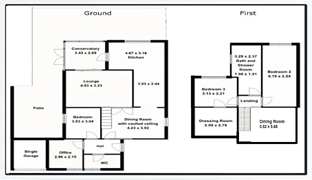
Floor Plan
It is cost-effective to have a floorplan measured as the EPC assessment is being undertaken.

Energy Advice
We offer advice and heat-loss detail and can recommend cost effective improvement measures.

Accompanied viewer
We offer a professional accompamied viewer to show your property if you are unable to attend or wish to self market or market online.

Saving you money
decreasing the heat-loss of you home INCREASES its value and comfort whilst saving your money, we can advise on the best cost-effective improvement measures to use.

Pre EPC assessment for Landlords to ensure compliance
We are happy to pre assess your properties to ensure that they will reach MEES, we can advise on the best cost-effective improvement measures to use if needed.

We endeavour at all times minimise our ECO footprint, ensuring that we don't add unnecessarally to global warming.
Add info for HEM (more accurrate EPC) Open the form here
Every UK property is legally required to have an EPC assessment if you are selling it, renting it out or it’s been newly built. EPCs are reported as grades, and they’re calculated based on two factors: the amount of energy used per square metre, and the level of carbon emissions per year (measured in tonnes)
Not only are more energy-efficient properties cheaper to run, they can also command higher house prices and may be eligible for “green mortgages”, which can come with preferential rates.
However, the system has garnered criticism and is particularly disliked by landlords, who may need to spend thousands to hit Labour’s EPC targets.
The Government is currently consulting on an overhaul of the system, with the Home Energy Model due to be unveiled in 2026 – and a new assessment process introduced this year means achieving the coveted “C” grade is more difficult than ever. Here are the steps you can take to improve an EPC but a competent EPC assessor can advise on the most cost effective measures:
What are EPC ratings?
Why should you consider improving your EPC?
Seven-step guide to improving your EPC
Energy Performance Certificate FAQs
What are EPC ratings?
EPC ratings refer to Energy Performance Certificates. Properties are assessed on a range of factors, including ventilation, property size, layout, windows, doors and lighting, among others.
Properties are scored on a scale of 1 to 100, and given a letter rating from A (extremely efficient) to G (extremely inefficient).
The average EPC rating for properties in England and Wales is D
The ratings system itself has also garnered criticism, with consuer goup Whch? Branding it “inaccurrate and misleading”. However the current changes are set to improve the accuracy and clarity.
For landlords however, EPCs present a challenge. Currently, a minimum grade of “E” is required for rental accommodation, but the current Government has resurrected the requirement for it to be “C” or above by 2030. For new tenancies, requirements kick in from 2028. This could cost investors thousands of pounds – particularly if they own older buildings, which tend to be less energy-efficient.
The work needed could involve anything from insulating a property’s attic, at a cost of a few hundred pounds, to overhauling its energy network and installing a heat pump and solar panels.
The Government is consulting on a complete overhaul of the EPC system. Reforms suggested by Labour include several metrics previously overlooked by current EPCs, including insulation quality and carbon emissions, as well as “the capacity to integrate with smart technology”, such as smart meters and dynamic energy tariffs.
The consultation published by Labour this month, said: “Smart meters, intelligent appliances like EV charging points, solar PV battery storage, and heat pumps – along with smart tariffs and services – will enable and encourage users to adapt their consumption patterns to match periods of cheap, abundant low-carbon electricity supply.”
Why should you consider improving your EPC?
While making EPC improvements can cost money, there are financial advantages to a higher rating:
Lower running costs. The process should lower your energy bills – and if you choose to do something likr installing solar panels or a home battery, you could even make money from the selling of extra energy they produce back to the National Grid.
Preferential mortgage rates. If you qualify for a green mortgage, you might get offered better interest rates.
You could also get a better price when you come to sell.
Higher property values. Potential buyers are known to value potential energy savings and a higher EPC grade can suggest that recent work has been done on the property.
Avoiding fines. As a landlord, you can face a hefty penalties for properties that aren’t up to scratch.
Identifying opportunities. Your own EPC will suggest changes that could upgrade your property’s efficiency and help it reach a higher rating.
Seven-step guide to improve your EPC rating
There are lots of things you can do to improve your property’s energy efficiency – while some are simple, like changing the lightbulbs you use, some will be larger projects.
1. Upgrade to energy-efficient lighting
2. Insulate your roof and walls
3. Invest in double or triple-glazed windows
4. Upgrade to a more efficient boiler
5. Install underfloor heating
6. Implement smart heating controls
7. Explore renewable energy options
1. Upgrade to energy-efficient lighting
Energy-efficient lighting refers to replacing your current lightbulbs to LED equivalents. According to the Energy Saving Trust (EST), switching to 50-watt halogen bulbs could save you £4 per lightbulb over the course of a year. This change is becoming less of a choice and more of a necessity, since companies are no longer allowed to manufacture inefficient halogen lightbulbs. The only instances where you might still see them is where shops are still selling their old stock. As part of the Reduced Data Standard Assessment Procedure (RdSAP) 10 changes introduced on June 15 2025, EPC assessors will be required to count the number of lightbulbs in a property, and record whether they are LEDs or not. Around the house, the EST says it’s still common to find inefficient bulbs in ovens, cooker hoods and security lights.
2. Insulate your roof and walls
The insulation a house might require depends on when it was built; it is considerably more expensive for older homes. Those built after the 1920s typically have cavity walls, which cost around £1,000 to insulate. Solid walls, more common in older houses, cost about £12,000 to insulate externally and £8,500 internally, excluding redecorating costs. Floor insulation is between £1,600 and £2,900 for a typical “suspended” floor. Following the aforementioned RdSAP 10 changes introduced in June 2025, energy assessors will be required to record whether individual walls are exposed or sheltered. The new criteria also require assessors to measure the thickness of walls to the nearest 25mm, with a minimum value of 10mm. Assessors must also record whether any top floor rooms are “true in roof” (meaning there are no walls) or if it is a “room in roof” (meaning it has walls at least 1.8m high). Lastly, RdSAP 10 requires assessors to record ventilation entries beyond open fireplaces, including blocked chimneys, open flues, extract fans, passive stack vents, and flueless gas fires. Insulation costs can be trimmed by sourcing cheaper materials. Savvy landlords can Salvage materials that would otherwise end up in a skip by using online marketplaces such as Facebook or Gumtree. Some are slashing their maintenance costs by 25pc by collecting building materials that would otherwise be thrown away. Apps have been developed for this very purpose, such as Sustainability Yard, where materials being traded for up to 80pc less than when they are new, with 30pc going for free.
3. Invest in double or triple-glazed windows
One of the best ways to protect your home from draughts and heat – not to mention noisy neighbours – is by investing in your windows. As of June 2025, assessors are required to measure every window, and record orientation, frame type (i.e. PVC), glazing type and gap, how old the glazing is, draught proofing, whether or not the window has shutters, and the location within the property. There are different window ratings, which reveal the cost and energy efficiency. For example, a set of “A-rated” windows for a semi-detached house will typically cost around £7,500. However, the EST estimates that in an entirely single-glazed semi-detached property with gas heating, adding A-rated double glazing could save £195 a year and 330kg of carbon dioxide. If your property is a listed building, or in a conservation area, you may need to consider specialist double glazing options that match the design and thickness of the original windows. 4. Upgrade to a more efficient boiler
Swapping out a gas boiler for a heat pump is a big decision – and one many homeowners will eventually face. New-build homes will not be built with gas boilers from 2025, although the Government has shelved a proposed ban on replacing them in existing homes. Heat pumps are the alternative. Households in England and Wales can get up to £7,500 to put towards the switch via the Boiler Upgrade Scheme, which is due to run until 31 December 2027. The EST recommends homes should be property insulated, with bigger radiators and underfloor heating before a heat pump is installed, which could add thousands to the cost of a switch.
5. Install underfloor heating
Underfloor heating can work with a heat pump or gas boiler, and it can be a more efficient way to heat a room than radiators. However, it can also be expensive and messy to install. You can opt for electric or water underfloor heating. Electric involves a wire being connected to the mains, which heats up when the system is turned on. It can be easier and cheaper to install, and is quicker to warm up. According to Checkatrade, the average installation cost for electric underfloor heating as part of a renovation will set you back between £60-£85 per square metre. Water underfloor heating works via a network of pipes. When they are filled with warm water, the pipes heat up and spread that heat to the flooring. This can take a while, and the system is expensive to install. Checkatrade says it costs an average of £135-£185 per square metre as part of a renovation. However, it can have cheaper running costs once in place.
6. Implement smart heating controls
There’s little point using energy to heat rooms that no one’s in, which is why smart heating systems that allow homeowners to boost the temperature in certain rooms and at specific times of day are becoming increasingly popular. Some can be controlled via smartphone apps. This can be handy if your plans change because you can delay or bring forward when the heating comes on. Implementing smart technology into your home will also benefit your EPC in the long run, as Labour’s proposed Home Energy Model is planned to favour such technology.
7. Explore renewable energy options
Solar panels are one of the most common sources of renewable energy, costing £5,500 on average according to the EST. This depends on the type of panel, the size of the area covered and any difficulties with access to the roof. The opportunity to create your own energy can help reduce your bills, and it’s also possible to sell what you don’t use. However, this will require an energy storage system, which usually includes a battery that allows you to capture the energy generated. In terms of cost savings, you’ll need to weigh up the battery installation cost and the fact that some last longer than others. The EST suggests asking an installer to tell you the predicted lifespan and cost savings before going ahead with any battery storage purchases. Other renewable energy options include wind turbines and hydroelectricity.
Energy Performance Certificate FAQs
Can EPC rating affect the value of my house?
Research by Knight Frank suggests that improving an EPC rating can add up to £20,000 to the property’s value – thanks to buyers valuing the potential energy savings and recognising that a higher EPC grade suggests recent maintenance has been carried out.
What’s a good EPC rating?
The average EPC rating for properties in England and Wales is “D”. There can be significant savings if you’re able to improve your rating. Is there a minimum EPC rating for rental properties?
Currently, landlords must make sure accommodation is rated ‘E’ or above. By 2030, a minimum grade of “C” will be required for all rental homes, but for new tenancies the required grade must be met by 2028.
Customer Says
Really useful to understand the next steps to help plan how to make our home more energy efficient. Richard was more than happy to answer my many questions and was very helpful. Thank You. Charlotte Parbery Clark
Fantastic service and useful tips given. Report received back in the promised timeframe. Hellen Carroll
I would absolutely recommend. Richard attended our property, efficiently carried out the survey and was very reasonably priced. Sally Brunskill
Richard, just to say thank you for your prompt and efficient service. Sadly this seems the exception rather than the rule now so is much appreciated. Kath Donaldson
Thanks very much for a great service. Stephen Mason
Thank you for being so efficient. Glenn www.oneposhpad.co.uk
Nov 2025 That’s great , thank you for your great service, again. Lazlo, Vini Investments Ltd

Martin & Co
Our Assessors
Hugely experienced, qualified, accredited and insured.

Richard Stifter. DipDEA
Domestic Energy EPC Assessors, Green Deal and Heat-loss advice, Floor Plans

Stephen Thurlow. DipDEA
Domestc Energy Assessor.